
Learning how to learn
As Yogi Berra once said: Talent beats practice, and vice versa.

Every day I begin my piano practice with exercises. Some of them are old standbys from my childhood, the Hanon scales. Some are the delicate compositions of Beethoven’s student, Karl Czerny: charming—sometimes haunting—little melodies that develop virtuosity. Like all rituals, they signal my brain it is time to begin, and they also signal my consciousness what kind of day it is likely to be. My capacity for concentration varies depending on a number of factors, ranging from my state of mind, to how much sleep I got, to how busy my schedule is, to whether my arm hurts, to whether Eli has decided he wants to paw my leg until I take my hands off the keyboard and rub his head. Concentration is the most important thing. The state of my fingers is the next. This, too, varies.
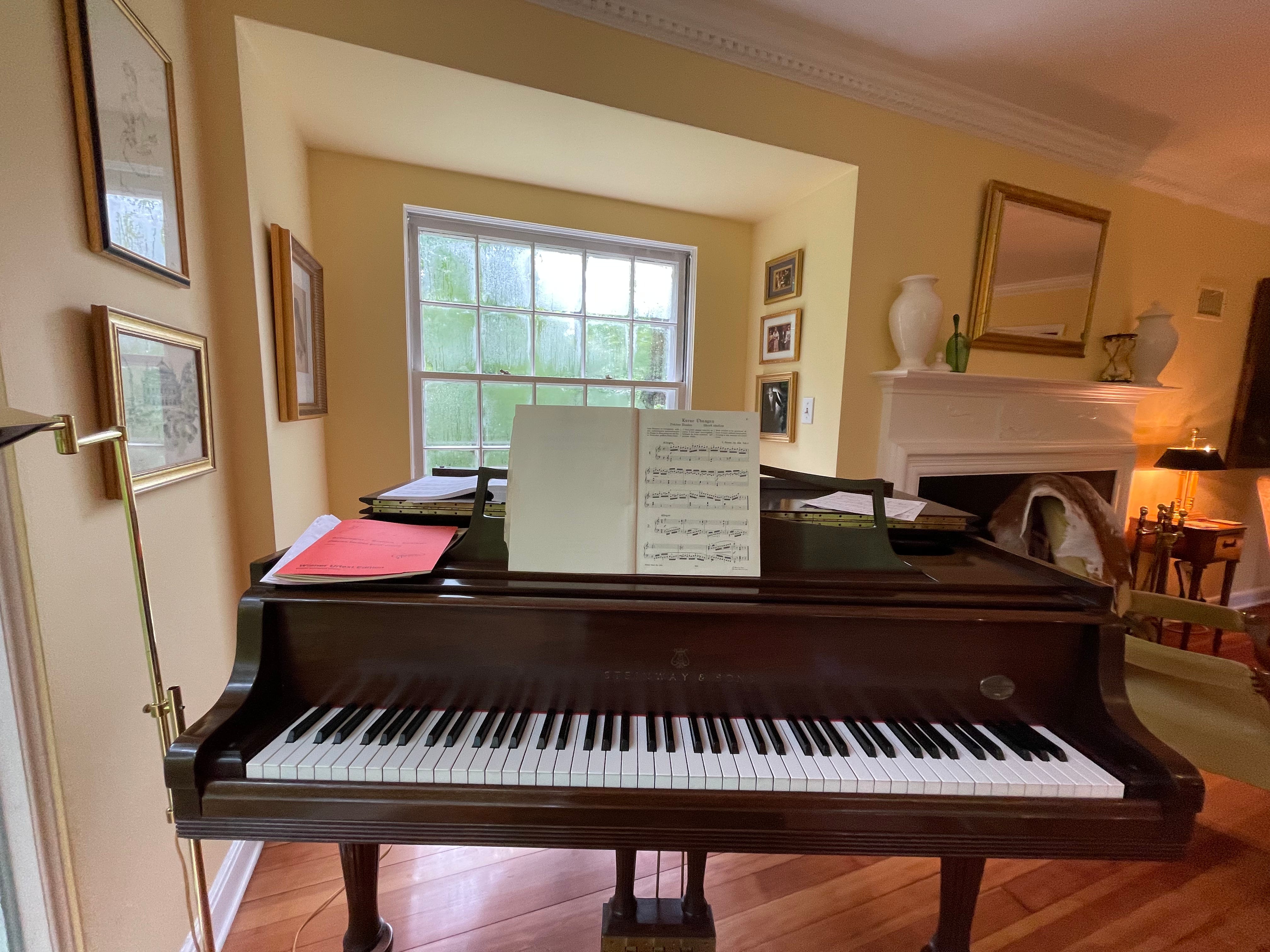
I have my music stacked in order on the left side of the piano, so I don’t have to puzzle over what I’m doing next. I start with the Czerny, move to the Hanon scales, then to a Mozart sonata that is the backbone of my repertoire, then to Bach, Schumann, Chopin, and Beethoven selections. After each piece I stack it face down on the right side of the piano, ready to be flipped over and replaced at the left side for tomorrow’s beginning. The key to a daily regime is to remove obstacles, and that means having a no-thinking process for beginning. I don’t ask myself what I feel like playing. The music is just there, in order. I take it up, open it, play, and then move on to the next piece in the stack. Some days I don’t feel like it. But that’s part of the ritual, too.
I start with the pieces I already know well in order to warm up, but also to keep them in good form. Then I turn to the pieces I’m working on. If you’re a musician, you know the drill. When you’re learning a new piece, you start by reading through as well as you can. You see the structure of the piece; you look for the challenges; you notice whether it will be merely a challenge, or working up against the limits of your capabilities. One of my biggest challenges is my small hands. I can barely span an octave, and that makes a lot of Chopin, for example, nearly impossible for me—if not actually impossible. There’s a particular etude of his I have always wanted to play, but when my hands and wrists started hurting, I had to stop working on it for fear of injury. I think it’s still possible for me to play, but I will need a teacher for that, if I can ever find one. (Another story.)
So, I begin by playing the part of the piece I can play. Usually I can get through the first page or so—not always—but when I find a stumbling place, I stop. This is where you have to take everything apart note by note. If it’s an annotated version I note the fingering, which is often helpful, but sometimes intended for someone with big hands. If that’s the case, I work through the most efficient placement of my own fingers for accuracy and velocity, and pencil in the numbers for each finger on each note. Then I play through one hand at a time. Finally, when my fingers have begun to naturally fall on the right notes, I put my hands together and very slowly play through, linking the bar before, and, if possible, the bar afterward. Depending on the music, this can require training your body to be able to leap the hands from one place to another while looking at the music—or knowing the notes so you don’t have to look at the music, but also finding your place in the music again when you look back. So, the variables require concentration, agility, and proprioception—the ability to sense where your body is in space. Having clean glasses helps, too, and mine are often smeared by dog noses.
This part of practicing is probably terribly tedious for anyone within hearing, but for me, it’s kind of the fun part. I love that moment when after multiple repetitions I finally can play through the measure or measures I’m working on. It’s like untangling a knot. Then, I begin working on velocity. This whole process can take minutes, hours, days, weeks, or maybe even months, depending. And then you move on to the next measure or phrase.
I have one sonata with two bars that I mess up nearly every time. Usually these kinds of challenges are mental rather than physical. As I approach a tricky section my brain starts telling me: Here’s the part you where you always stumble. And that is the moment concentration has broken, and, of course, the mistake reoccurs. It takes a lot of patience and diligent repetition at a very slow tempo to build past that psyche-out factor. Any little distraction at the wrong moment can throw me off, and then it can be very difficult to re-connect. The goal is to develop automaticity and, patient practice will eventually move me past the problem, so long as I don’t practice mistakes. Each mistake means I stop, slow down, and start again. I play until it’s clean. Sometimes, I realize I need to give it a rest until the next day. But then there are days when everything falls into place, my focus is complete, my hands fly, the music sings rather than clunks. Those moments of flow are the sweetest of all, but only come after the hours of work have taken place.
As you can imagine, it often takes weeks or months to conquer a new piece, if conquer is the right word. Some compositions are, essentially unconquerable, at least for an amateur. But the work is the thing. When I started my singing career, I expected that the performances would be the high points. But I soon learned that I loved the process. I loved rehearsing, experimenting, playing with the music. To me the fuss with the audiences all kind of felt in the way of the work. And that’s probably one reason I retired early. Well, that and backstage politics, which I naively thought were limited to the actual backstage. But that’s a story for another day.
Now it’s time for my other discipline. I have a little plot tangle to figure out, and all the patience in the world will be no substitute for insight. Or the muse.
Happy Monday.
***
“All shall be well, and all shall be well, and all manner of thing shall be well.” ~Julian of Norwich
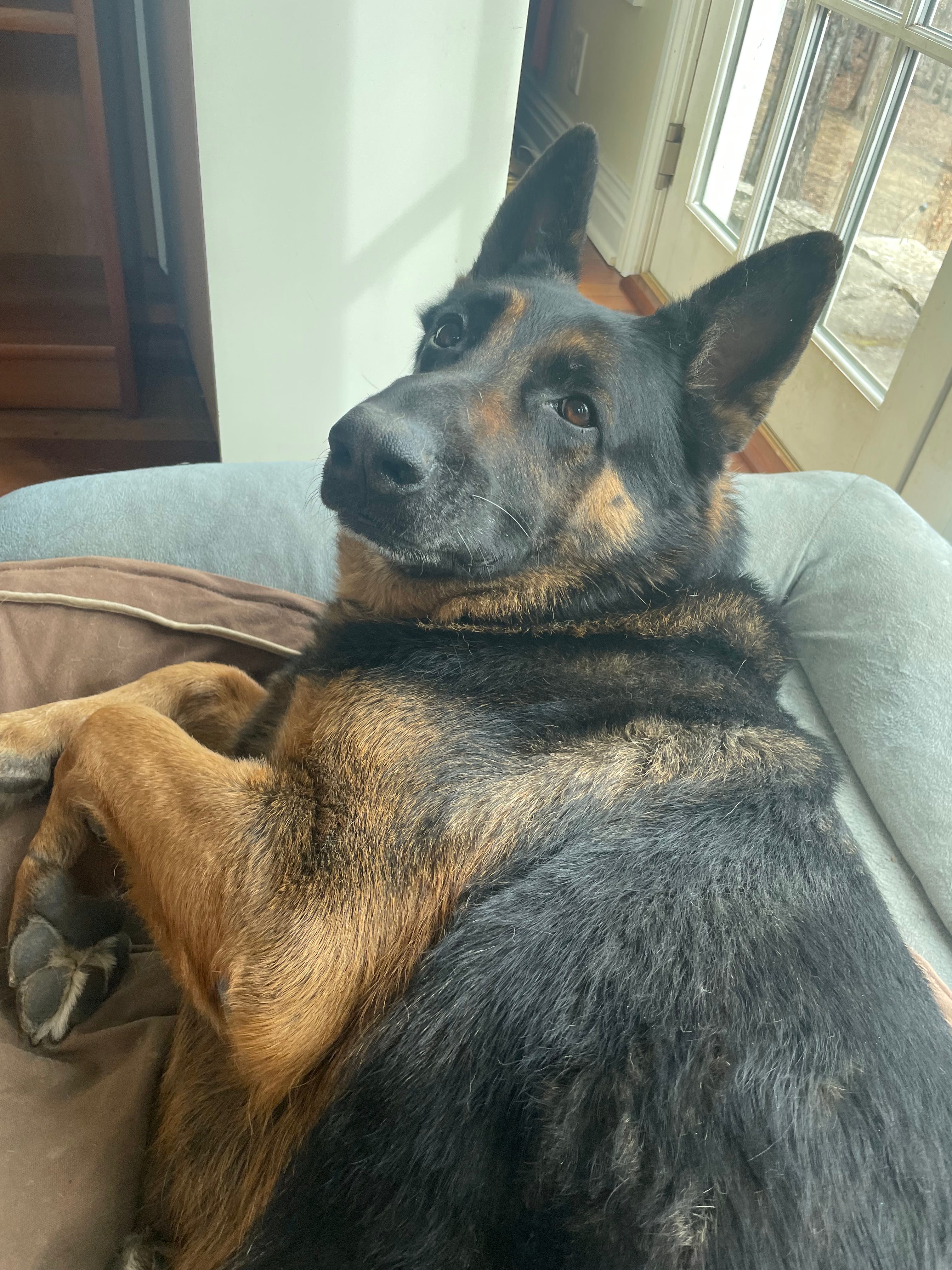
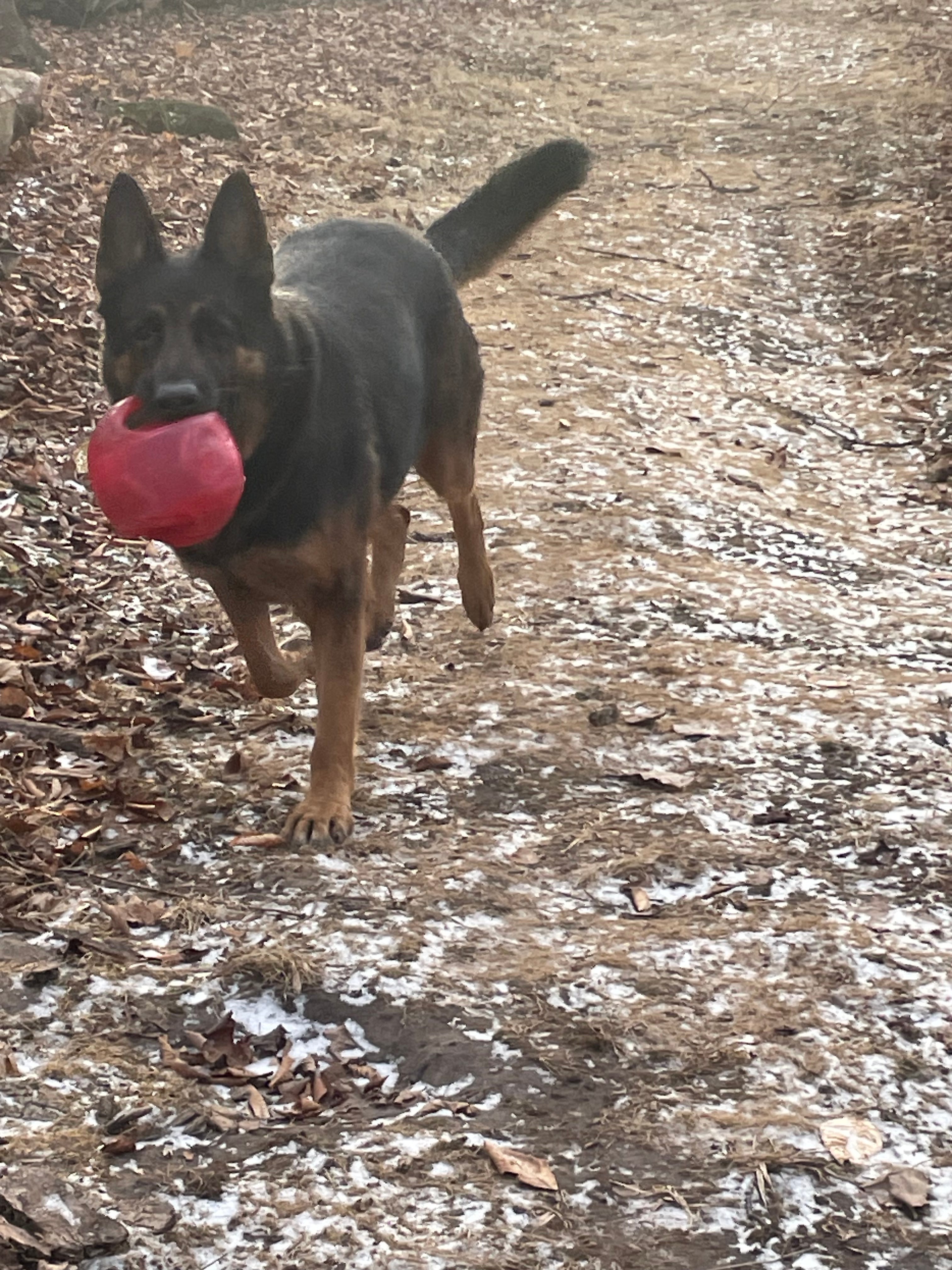
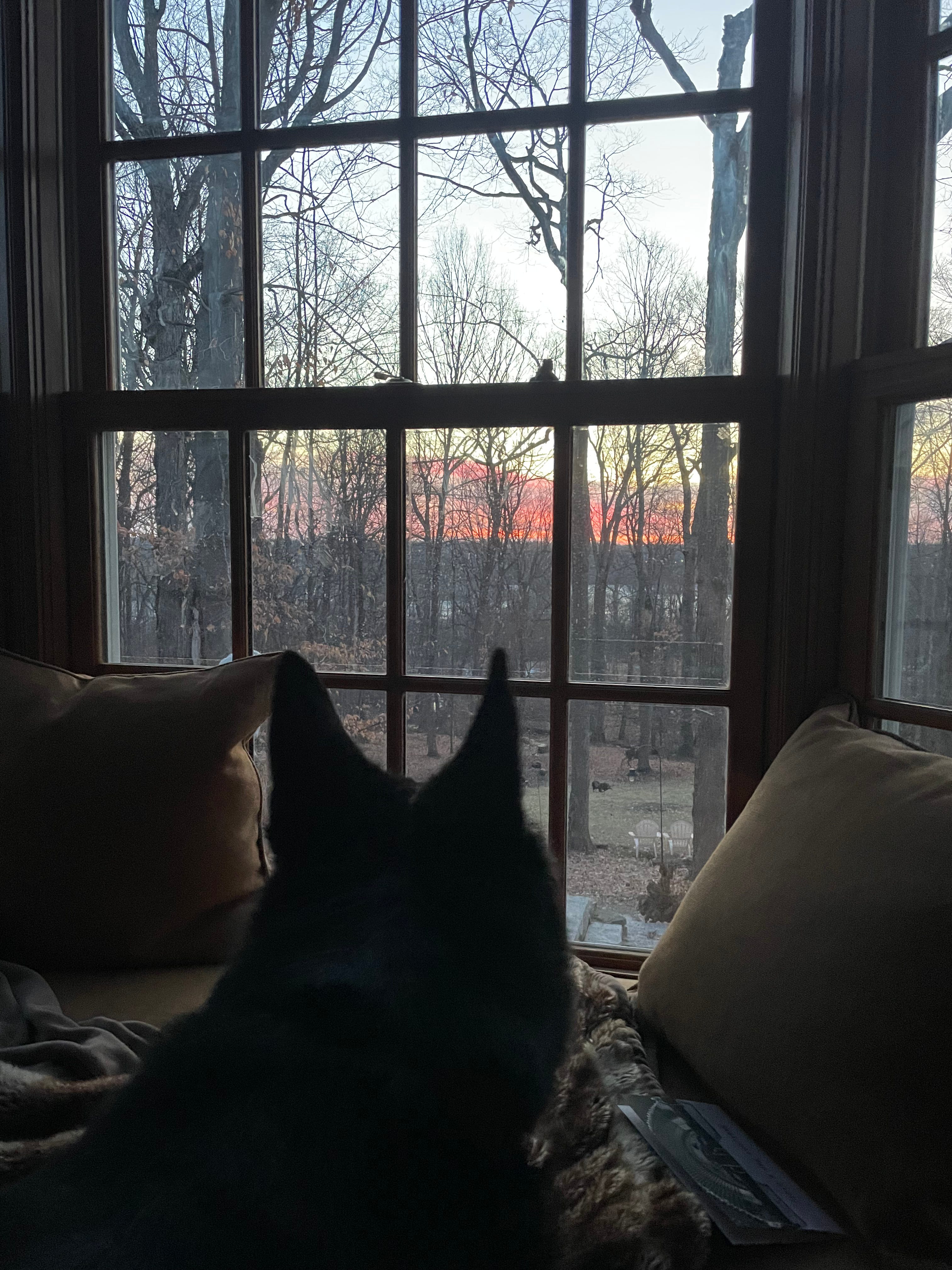
That's a nice picture of Auggie AND yes, I would also give him a pet every time! 😊🐾😎
Good grief! Is every part of your life as well organized as your music? If so…I’m impressed.